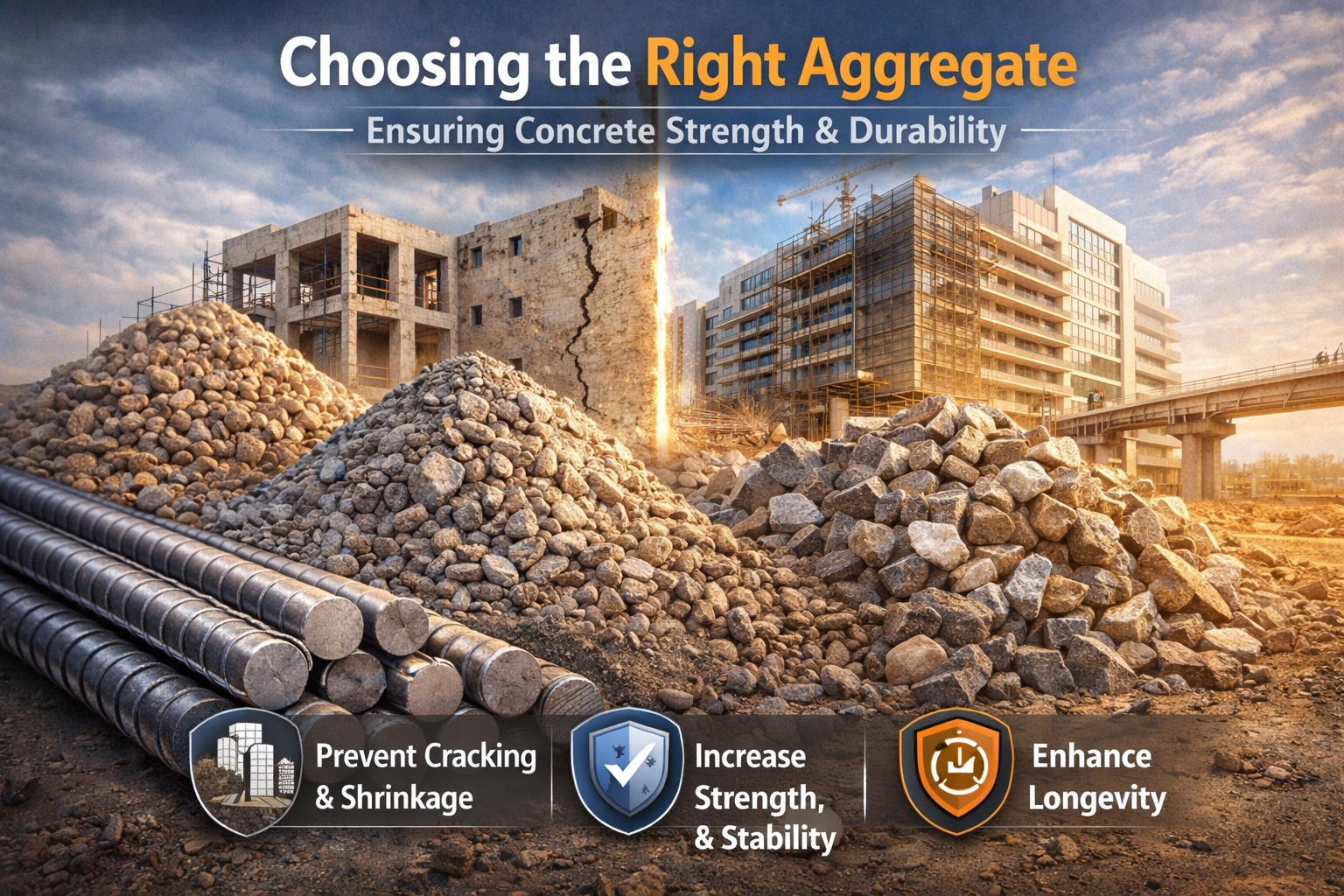
Importance of Selecting the Right Aggregate in Construction
Choosing the right aggregate is crucial for ensuring the strength, durability, and performance of concrete in construction projects. High-quality aggregates improve the load-bearing capacity of concrete and enhance its resistance to cracking, shrinkage, and environmental stress. The correct size and type of aggregate also help achieve proper bonding with cement, resulting in stronger and more stable structures. Using the right aggregate increases the overall lifespan of buildings and reduces maintenance costs over time. It improves workability during construction and ensures better finishing and structural reliability. Proper aggregate selection plays a vital role in delivering safe, durable, and long-lasting construction outcomes.
Types of Aggregate->(Gitti)
10 mm Crushed Stone
Uses: Used in slabs, thin sections, precast elements, RCC works with dense reinforcement, and residential construction.
20 mm Crushed Stone
Uses: Most commonly used in general RCC construction such as beams, columns, footings, and foundations due to its balanced strength and workability.
40 mm Crushed Stone
Uses: Used in mass concrete works like dams, bridges, retaining walls, and heavy foundations where high strength and reduced cement consumption are required.
Fine Aggregate
Uses:Used in plastering, masonry work, flooring, concrete finishing, and as a binding material in cement mortar and RCC works.
Graded Crushed Stone
Uses: Mix of different sizes, used for strong and durable concrete. and Ideal for high-strength concrete, highways, bridges, flyovers, industrial floors, and heavy-load structures.